- Bumi Iro-Iro
- Posts
- Feeling-thinking-being through flavour
Feeling-thinking-being through flavour
A salted invitation to tune into other worlds

Arianne Maki Ramaditya
September 22, 2025
Source: NASA
The following text is a hands-on meditation written for the ESEA Green Lions Fermenting Futures workshop, where we salted cucumbers together in preparation for making cucumber kimchi. I wrote this meditation inspired by Hyojin and Tonic’s think-feeling exercise on sugar, which was inspired by Yson Yunkaporta’s invitation to “think less with our heads and instead think-feel with our stomachs.”
The session, held in September 2025, was a whole lotta fun. We combined communal cooking with readings on climate colonialism, and I banged on my usual drum of the need to attune to multispecies worlds. This is not just a “cute” love for animals and plants (and I would ask that you think hard about the political connotations of “cute,” “girly,” “care,” and so on) but a very necessary part of decolonising our gut-mind-hearts.
Many of today’s violences can be traced back to a disenchantment of the world, where various cultures with myths and story-songs on the inherent, magical aliveness of all things were dismissed by European colonisers as “primitive.” Control the way that stories are told and you control who is remembered, how knowledge is shared, and what values matter. Europeans had a magic of their own. By denying the aliveness of all things, they turned beings with agency into resources ripe for exploitation.
Climate catastrophe is inseparable from colonialism, and colonialism is inseparable from the control of storytelling.
⊹ ࣪ ﹏𓊝﹏﹏𓂁﹏⊹ ࣪ ˖
Take a pinch of salt. Crumble it between your fingers.
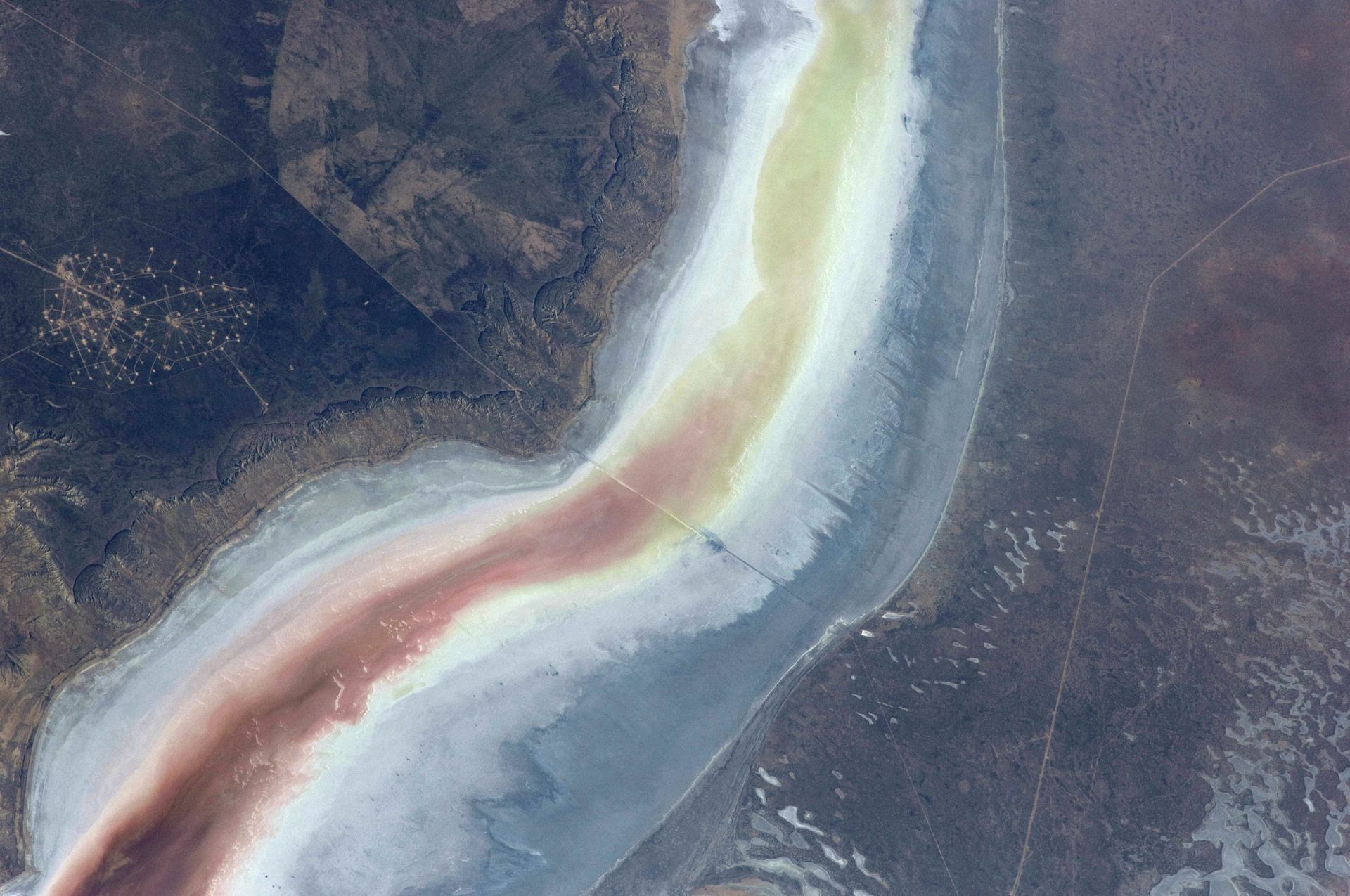
The salt you touch has come from an estuary on the edge of this land, where two realms of sea and river meet. In this intertidal zone, a ribbon of saltmarsh waxes and wanes with the swell of the tide. As lighter freshwater pushes out towards the ocean, the denser saltwater sinks towards the bottom. Eventually, both bodies of water will be stirred together by winds and shores, forming a white crust of salt.
Place a crystal onto the tip of your tongue, roll it to the back, and crunch. Feel how the salt dissolves.
Without salt, life would not exist. Like all animals, humans need salt to regulate nerves and delicate muscles, and to use in fluids like sweat and tears. The salt that flows from your eyes comes from the rocky heart of the Earth. Time has distilled the Earth’s skin of ancient ocean into salt caves, salt flats, salt marshes, into rains that rise then fall down mountains, through rivers, back to seas, and back to rain. Everything on Earth is recycled. From the salt we consume to the air that we breathe. Nothing is new. Everything is sacred.
Take a healthy pinch of salt and, at your own pace, sprinkle the salt over your cucumbers, ensuring that every surface of each piece is covered in flakes.
After the first human fires came the white gold of salt. Travelling on the backs of camels through the Sahara desert, along the banks of the Huai and Yellow rivers, over the paved stones of the Via Salaria, salt has built cities and broken worlds. It has been said that, without salt, the British Empire would not exist as a perceived salt scarcity was part of what propelled the English to set sail. Like sugar, salt was a slave trade commodity and enslaved Africans were forcibly brought to the Carribbean to harvest salt from the marshes. In the land now commonly referred to as New England, where Europeans had massacred members of the Pequot tribe, the British would establish a salt monopoly that would later incite “American” independence. In India, along the Bengal and Orissa coasts where salt was made from briny soils, a colonial British salt tax would lead to an Indian independence movement. Salt brings out the complexities of flavour. In complexity, the world is made.
Wipe the salt off of your hands. Examine each of your palms.
On each hand breathes a universe. Anywhere between 10,000 to 10,000,000 microbes live on just one human hand. Microbes, tiny, incomprehensible, are the origin of all life. 4.2 billion years ago, in the primordial soup of Earth’s first becoming, the Last Common Ancestor was a microbe, alive and breathing near ancient, underwater volcanoes.
Bring your palms back together. Like the river and the sea of the estuary that formed the salt, two worlds now meet.
Fermentation is a microbe-human collaboration. The oldest evidence of fermentation has been found in a cave in what is now occupied Palestine, 13,000 years ago. Like salt, microbes are essential for the sustenance of all life; regulating gases, nutrifying soils, digesting food, protecting immune systems, and producing oxygen. Microbes are the magic of life, making visible the invisible processes all around us and within us, spinning the intangible into things that can be touched and tasted.
Take a bite of cucumber. Is it salty? If not, sprinkle more.
Known by their colonial name, Lactobacillus microbes are present on the skins of vegetables and on our hands. The microbes on these cucumbers will mingle with the microbes from our hands, from the air, from the space, to combine into an edible snapshot of this very moment. Sweet-toothed Lactobacillus will convert sugar into lactic acid, turning sweetness into pungent, funky, sour. The salt will create the habitat for Lactobacillus to thrive, killing off any other microbes that threaten its survival. Harm is a part of life. Can we extend our gratitude to the microbes harmed for the making of this kimchi? Can we discern which harm is necessary, and which harm is not? If it is safe to do so, how can we stay present amidst harm? How can we show up for those that are harmed?
With your hands on your lap, on your heart, or on your stomach, breathe into the contact of your palms.
Feel how your palms ground you. Breathe here for a little while.
Salt still runs the world today, used in food preservation and disinfection, in feedstock, water treatment, and the creation of plastic, chlorine, paper, glass, detergents, and more. Like animals, machines and vehicles need salt, but, increasingly, more and more bodies do not need salt. Climate catastrophe – the Earth’s response to centuries of genocide and colonialism – is choking seas and soils with salt, leading to the mass deaths of many multispecies individuals. In food, globalised systems ruled by a handful of Western corporations churn out nutrient-low, salt-high foods, all while many parents can’t afford to feed their families vegetables.
What good does it do to pay attention to these events? Attention, like attend, tender, and tend, all come from the same Latin root. Tendere; meaning to stretch towards. Allowing ourselves to be affected by others, we stretch and expand our world beyond the parameters of that which harms us.
If you like, you can hold a piece of salted cucumber before you.
Remember that things still grow from the earth. That what we plant and tend to is that which will grow. Feel the salt between your fingertips, the crunch of the cucumber, feel the soil that nourished its roots, see the bugs that slept on its leaves, smell the sea that carried it, the lorries, the planes, the farmers shovelling dirt, the mechanised equipment of the salt mill.
Follow the spirit of the long past, from the first traders of salt walking the sands of a distant desert, to a future yet to be made where nothing is decided and so everything is possible, to the home of the present moment where we each find ourselves in now.
Feel the vegetables, think the salt: what worlds do you see?
⋆.𓆝.ೃ࿔ ݁𓆟:・𓆞༄
Reply